YOU AND YOUR FAMILY BELONG HEREA place for them.
A little breathing room for you.
Welcome to Heck and Back.
When the justice system touches your family, children need different things at different ages. Sometimes they need help understanding. Sometimes they need somewhere to put their questions. And sometimes they just need to play.
Heck and Back is the younger side of the Hell and Back family—a welcoming place with stories, activities, and support shaped around each stage of growing up.
AT THE HEART OF HECK AND BACKThe parking lot moment.
Need something to open right now?
These links go straight to activities. No signup, score, or countdown.
You made it through the hearing, the visit, or the phone call. Now you are sitting there, trying to work out how to take the next step—with a child beside you who needs you, too.
This is one of the moments HAB was built for. It can follow devastating news, welcome news, another delay, or simply a difficult day. You may not have words yet. Your child may want questions answered, something to do, or quiet company. There is room for both of you.
You do not have to be cheerful before you can care for them. You do not have to explain everything before you have had a moment yourself.
- First, get settled.
If you are in a car, stay safely parked. Stay with your child. Check the small things you can handle now: a drink, a comfortable seat, whether someone needs the bathroom.
- Give them a simple explanation.
“I need a quiet minute. You have not done anything wrong. I’m here with you.” You can be honest without sharing details they are not ready for.
- Offer one or two choices.
“Would you like to make a picture or find some shapes?” Open it before handing over the phone. An older child can choose an activity, quiet, or sitting with you.
- Take your own moment.
There is no assignment to finish. Sit, have some water, or ask someone you trust to stay on the phone. If you do not feel ready to drive, stay parked and work out the next step.
- Come back together.
“Would you like to show me what you made?” Then offer a small next step: water, a snack, a little more time, or the trip home. A bigger conversation can happen later.
“I don’t have all the answers yet. I can tell you what I know, and we can leave the rest for later.”
If the news was a no
You do not have to turn a denial into a lesson or find a positive side immediately. Try: “We did not get the answer we hoped for. I’m upset, and I’m still here with you.”
Keep uncertain dates uncertain. “I don’t know when that will change” is more useful than a promise you cannot keep. For a young child, give only the immediate plan: “We’re staying here a little longer, and then we’ll go home.”
Ask another adult for support when you need it. Your child does not need to become the person responsible for getting you through the moment.
If the news was a yes
Relief does not have to arrive neatly. You might be happy, exhausted, worried about what comes next, or all three. A child may not react the way you expected.
Try: “We got some good news. There are still details we need to find out.” Explain the next confirmed step without promising a homecoming date that has not been confirmed.
They can be excited and still need a snack, a game, or quiet. Let the ordinary things count.
If you are still waiting or plans changed
Try: “The plan changed. I don’t know everything yet. Here is what we are doing next.” Keep the next step small and concrete.
Instead of asking them to wait well, offer something they can choose now: a picture, a story, looking out of the window, or sitting beside you.
If they do not want the phone
That is okay. The activity is an option, not a requirement. Try a color hunt from your seats, a drawing on paper, a story made one sentence at a time, or simply sitting together.
A teen may prefer their own music or silence. Ask rather than assume. Agree on what happens next so quiet does not feel like being forgotten.
If they keep asking questions
Answer one question at a time. Ask: “Which part do you want me to explain?” It is okay to say, “I want to answer that, but I need a minute to find the words.”
If you say you will talk later, return to it. Start with: “You asked me something in the car. Do you still want to talk about it?”
These activities give you something gentle to offer while you stay nearby. They do not replace your presence or supervision. Nobody has to finish an activity or feel better on a schedule.
HELPING THEM, TOGETHERThe same moment. Different needs.
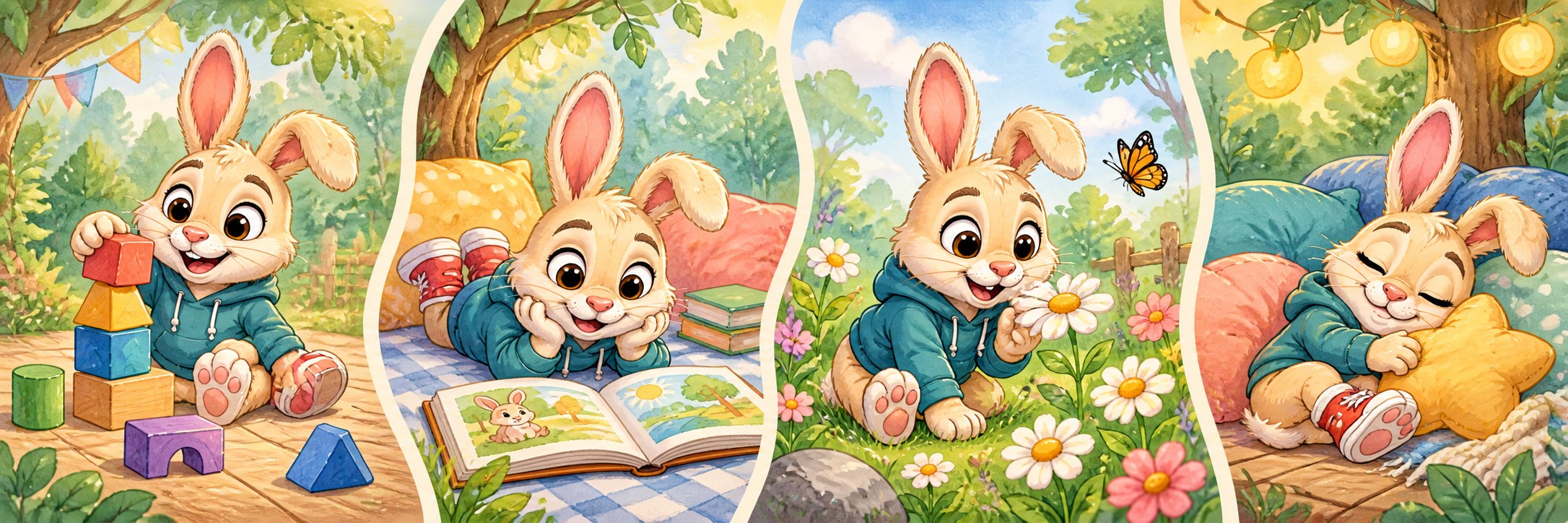
Littles · Habby
Keep it concrete: where you are, who is with them, and what happens next. Their space stays about play, not incarceration or working through feelings.
Try: “I’m sitting right here. Would you like the stars or the colors?”
On-screen: color patches, eight tap-to-light stars, a little story, a seated shape hunt. Off-screen: count fingers, spot colors, or make up an animal picnic.
Kids · Miss Lucy
Give a short, honest answer and leave room for more questions. They do not have to talk before they can play.
Try: “Would you like me to explain one thing, or would you like to do something together first?”
On-screen: a cozy picture to build, a story starter, a noticing game. Off-screen: draw three pictures of what happens next, or take turns adding a line to a drawing.
Preteens · Miss Lucy
Offer a real choice without making them responsible for your feelings. They may want information, privacy, or an ordinary distraction.
Try: “Do you want the short version of what happened, some quiet, or a question answered?”
On-screen: a quiet sketchbook, pattern puzzles, and room to experiment. Off-screen: invent an ordinary-day superpower, sketch a place, or choose something familiar to do next.
Teens · Morrow
Be direct. Ask what kind of support they want and respect a pause. They do not need to act as another parent or perform a particular reaction.
Try: “Would you like company, practical information, or space without questions? I’ll check in again before we leave.”
On-screen: a comic idea, pixel sketching, unsent writing, and one manageable next step. Off-screen: their choice of music, a sketch, or a conversation about something unrelated.
Before a visit, hearing, or difficult day
Show them their activity space ahead of time, so it is familiar. Check the phone has enough battery and that the activity loads where you will use it. Pack paper and something to draw with as a backup; these pages are not an offline app.
Tell them what you know about the day. Agree on a simple way to ask for a pause. Decide which adult you can contact if you need help afterward.
After the moment has passed
Notice what helped without grading the child’s reaction. “You showed me your picture while we waited” is enough. Check on their question again, even if they seemed fine afterward.
You may need support after they have settled. Reaching out to another adult is part of caring for yourself, too.
Meet the family
Haul, the husky pulling the sleigh, represents the parent or caregiver holding everything together. Riding along are Habby, Miss Lucy, and Morrow, our guides for the spaces your children will explore.
Privacy and boundaries
The three younger spaces have no message boards. Private or instant messaging and young people’s image, video, audio, and file uploads are not available. The teen board remains closed while its safeguards are prepared. Our mascots represent children; children’s faces do not appear here.
These activities do not require a child’s name or an account. If a feature needs information, we ask only for what makes that feature work. Hosting providers may keep service or security logs.